
Career guide
Frontend Developer Roadmap for Students and Freshers
This frontend developer roadmap takes you from your first HTML page to a deployed React app in six clear stages. Each stage lists what to learn, how long it usually takes and what to build, so you always know what comes next.
- 6 stages, 6 to 9 months
- Projects for every stage
- Tool list you can trust
- Written by the Icanio Tech School Academic Team
- Time needed
- 6 to 9 months at 10 to 15 hours a week
- Start with
- HTML, CSS and JavaScript
- End with
- React, TypeScript, testing and deployment
- Written by
- Icanio Tech School Academic Team
Quick answer
What is a frontend developer roadmap?
A frontend developer roadmap is an ordered learning plan for building the parts of a website or web app that users see and use. It starts with HTML, CSS and JavaScript, adds Git, then a framework like React with TypeScript, and finishes with testing, accessibility, performance and deployment. Each stage ends with a small project you can show.
By Icanio Tech School Academic Team · Updated

The role
What does a frontend developer do, and why follow a roadmap?
A frontend developer builds the screens, layouts and interactions people use in a browser. They turn designs into working pages, connect those pages to data from APIs and make sure everything is fast, accessible and works on every screen size.
On a normal day, that means writing components, fixing layout bugs, reviewing a teammate's pull request and talking with designers and backend developers. Frontend work sits between design and engineering, so communication matters as much as code.
A good frontend developer roadmap mirrors this job. It teaches you the building blocks first, then the tools teams use to ship and maintain real products.
- Turn Figma designs into responsive pages
- Build reusable components in a framework like React
- Fetch and display data from APIs
- Test, debug and improve performance and accessibility

Timeline
How long does it take to become a frontend developer?
Most students need six to nine months of steady practice to become ready for a frontend internship, at about 10 to 15 hours a week. If you already know some HTML and CSS, you can move faster. If you are new to programming, plan on the longer end.
The timeline depends on how much you build, not how many videos you watch. We recommend a simple rule for this frontend developer roadmap: for every hour of tutorial, spend two hours building something on your own. That ratio is what turns knowledge into skill.
You do not need to finish every stage before applying. Once you complete stage four and have two deployed projects, you can start applying for internships while you keep learning.
Stage by stage
The frontend developer roadmap in 6 stages
Work through the stages in order. Each one builds on the last, and each ends with a project for your portfolio.
- 1Stage 1, weeks 1 to 4
HTML, CSS and web foundations
Learn semantic HTML5, Flexbox, Grid, media queries and CSS variables. Build a responsive personal portfolio page that looks right on a phone and a laptop.
- 2Stage 2, weeks 3 to 5
Git and GitHub
Learn to commit, branch, merge and open a pull request. Put every project from here on in a public repository with a clear README.
- 3Stage 3, weeks 5 to 12
Core JavaScript
Learn variables, functions, arrays, objects, DOM events, form validation, browser storage, and async code with fetch and promises. Build a weather or movie search app that calls a public API.
- 4Stage 4, weeks 12 to 20
React and TypeScript
Learn components, props, state, hooks, routing and basic TypeScript types. Build a multi-page dashboard that fetches, filters and displays data.
- 5Stage 5, weeks 20 to 28
Testing, accessibility and performance
Write unit tests with Vitest and React Testing Library. Learn WCAG basics, keyboard navigation and Core Web Vitals. Audit and improve one of your earlier projects.
- 6Stage 6, weeks 28 to 36
State, auth and deployment
Learn state management, reusable component libraries, authentication and role-based screens, and deploy with a CI/CD pipeline. Build one capstone product UI end to end.
Your toolkit
Which tools are on the frontend developer roadmap?
These are the tools most frontend teams use today. You do not need all of them on day one. Add each one when your frontend developer roadmap stage calls for it.

JavaScript
The core language of the web

React
Component-based user interfaces

Tailwind CSS
Utility-first styling

Figma
Reading designs and handoff specs

Vite
Fast local development and builds

GitHub
Version control and code review

Chrome DevTools
Debugging and performance checks

Vercel
Hosting and preview deployments

Framework choice
Should you learn React first or JavaScript first?
Learn JavaScript first. React is a JavaScript library, so every React problem you hit later is really a JavaScript problem. Students who skip ahead usually get stuck on arrays, objects and async code inside React components.
A fair checkpoint is this: can you build a small app that fetches data, shows a list, lets the user filter it and saves a setting in the browser, using plain JavaScript? If yes, you are ready for React. If not, spend two more weeks on stage three of this frontend developer roadmap.
Once you start React, learn TypeScript alongside it rather than later. Types catch many beginner mistakes early and most modern React codebases use TypeScript.
- Comfortable with map, filter and reduce on arrays
- Can explain what a promise is and use async and await
- Can add and remove DOM elements in response to events
- Can read an error message and find the line that caused it
Projects
What projects should you build at each stage?
Build one project per stage. By the end of the frontend developer roadmap you will have a portfolio that shows steady growth.
| Stage | Project idea | What it proves |
|---|---|---|
| HTML and CSS | Responsive portfolio page | Layout, responsive design, clean markup |
| JavaScript | API search app with filters | DOM, events, async code, error handling |
| React and TypeScript | Data dashboard with routing | Components, state, hooks, types |
| Testing and accessibility | Audit and fix an old project | Tests, WCAG basics, performance |
| Capstone | Full product UI with login | Auth, state management, CI/CD deploy |
Deploy every project and link it from your GitHub README. A recruiter should be able to open your work in one click.
Job ready
Checklist: are you ready for a frontend internship?
Use this list to check your progress on the frontend developer roadmap before you apply.
- I can build a responsive layout with Flexbox and Grid without a tutorial
- I use Git every day and can open and review a pull request
- I can fetch data from an API and handle loading and error states
- I have built at least one React app with routing and TypeScript
- I have written a few unit tests for my components
- My pages work with a keyboard and pass a basic accessibility check
- I have three deployed projects linked from my resume
- I can explain one technical decision in each project

Avoid these
Mistakes that slow down your frontend developer roadmap
These are the patterns our mentors see most often in students who feel stuck.

Tutorial loops without building
Watching one more course feels productive but rarely is. Close the video and rebuild the same project from memory.

Jumping to frameworks too early
Skipping core JavaScript makes React confusing. Follow the frontend developer roadmap order, even when it feels slow.

Ignoring accessibility
Accessible, semantic markup is a skill few junior developers show. Learning WCAG basics early sets you apart.

Projects that never go live
A project on your laptop is invisible to recruiters. Deploy early, even if it is not perfect, and improve it in public.

Learn with a mentor
How the Icanio frontend internship follows this roadmap
The Frontend Development internship at Icanio Tech School runs in four learning phases that follow the same frontend developer roadmap: web foundations with HTML, CSS and Git, then core JavaScript and TypeScript, then performance, testing and accessibility, and finally advanced React, authentication and CI/CD deployment.
You work with a practising Icanio engineer as your 1:1 mentor. Your code is reviewed to internal Icanio standards, and you build real projects: a responsive portfolio site, a dynamic dashboard and a capstone product UI deployed to the web. You finish with a certificate and a GitHub portfolio.
Icanio Technologies is a Tamil Nadu based AI company trusted by 100+ businesses. You can choose a duration from 15 days to six months, offline, online, part time or hybrid.
Recent completions
Students who followed a frontend developer roadmap with us
Recent interns who completed web and React tracks at Icanio Tech School.
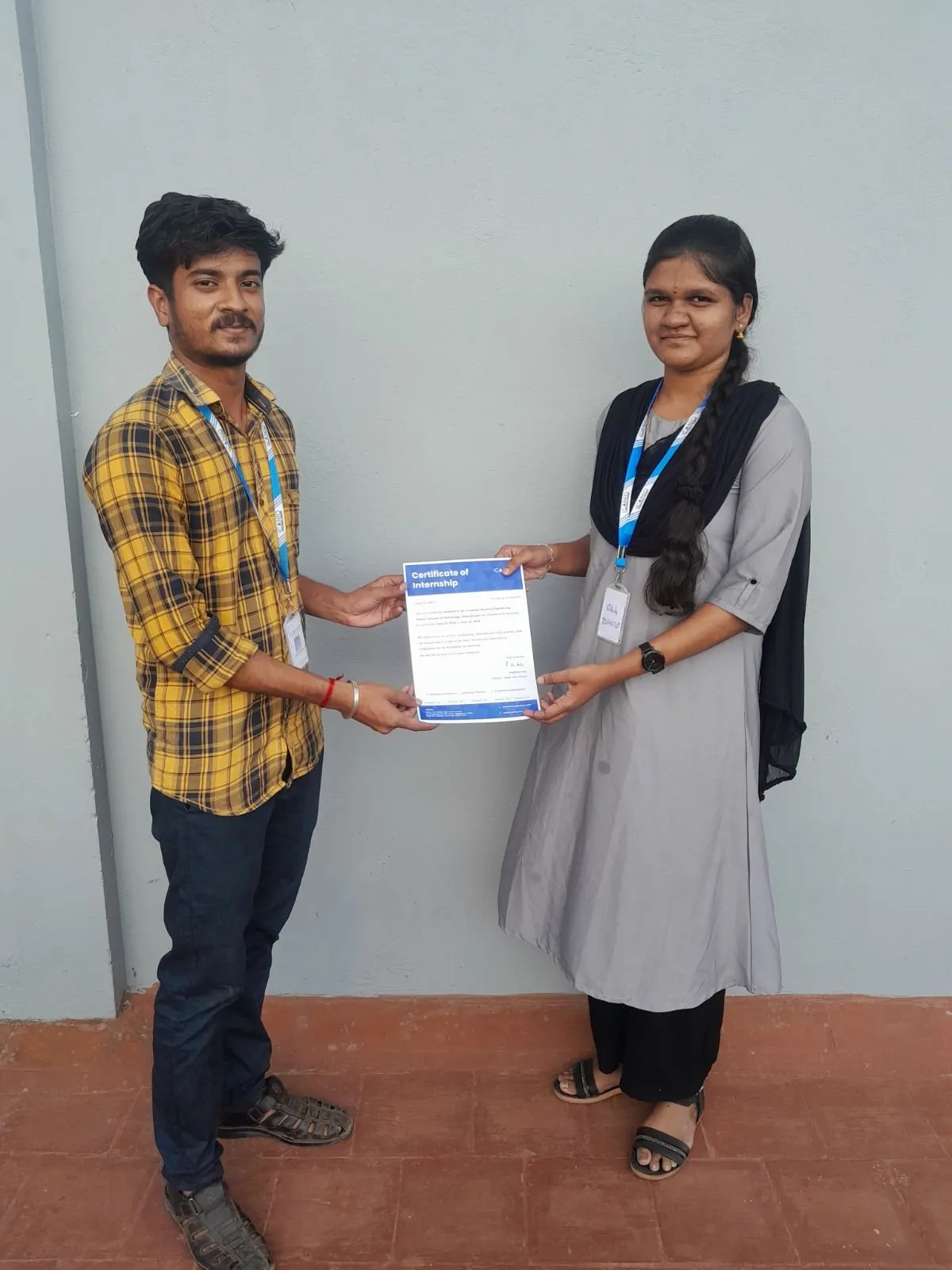
React JS · one-week
Harini M
B.E. CSE, Ramco Institute of Technology, Rajapalayam
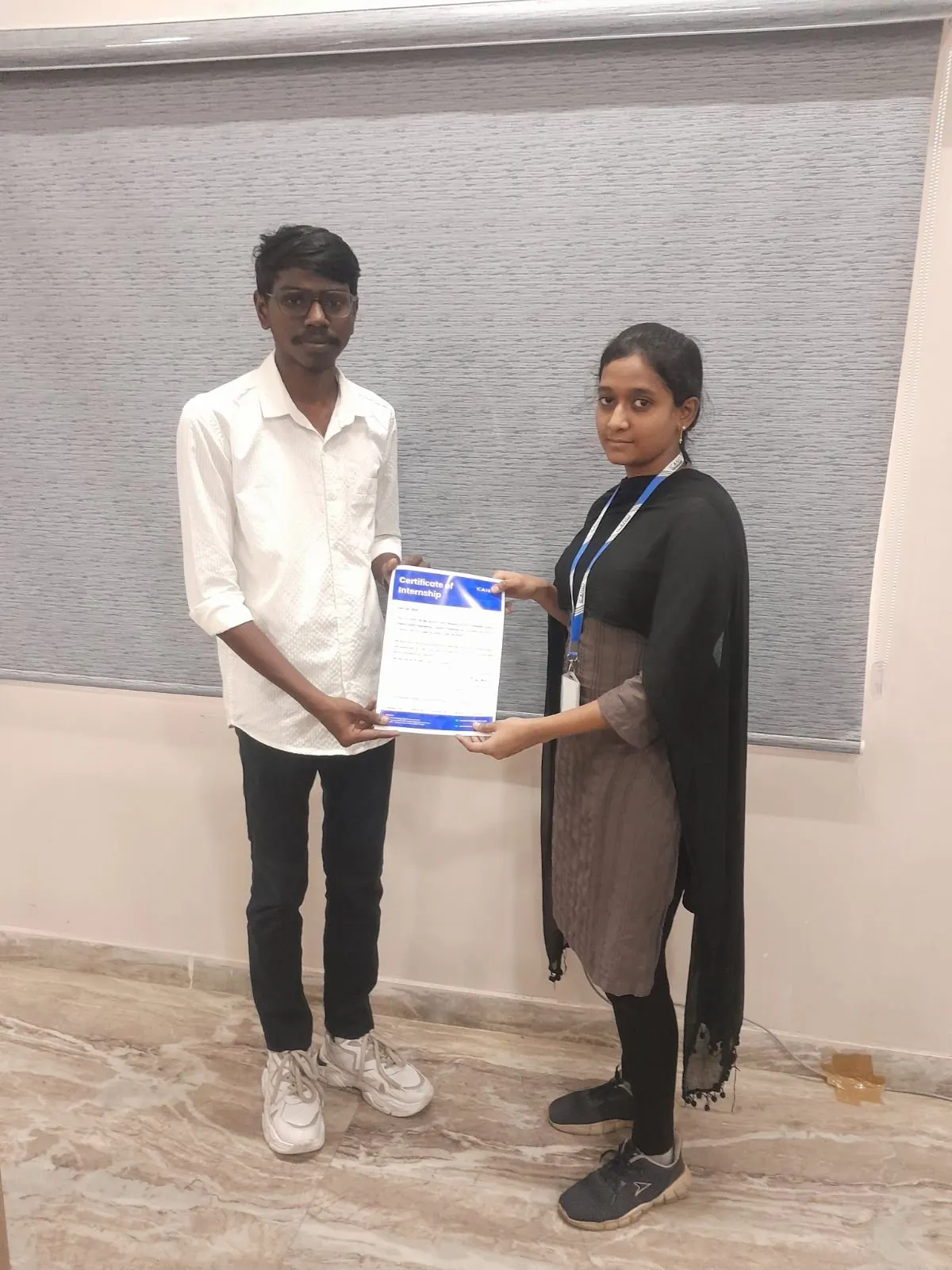
Digital Twin · one-month
Jerusha Glory Angelin G K
B.E. CSE, Francis Xavier Engineering College, Tirunelveli
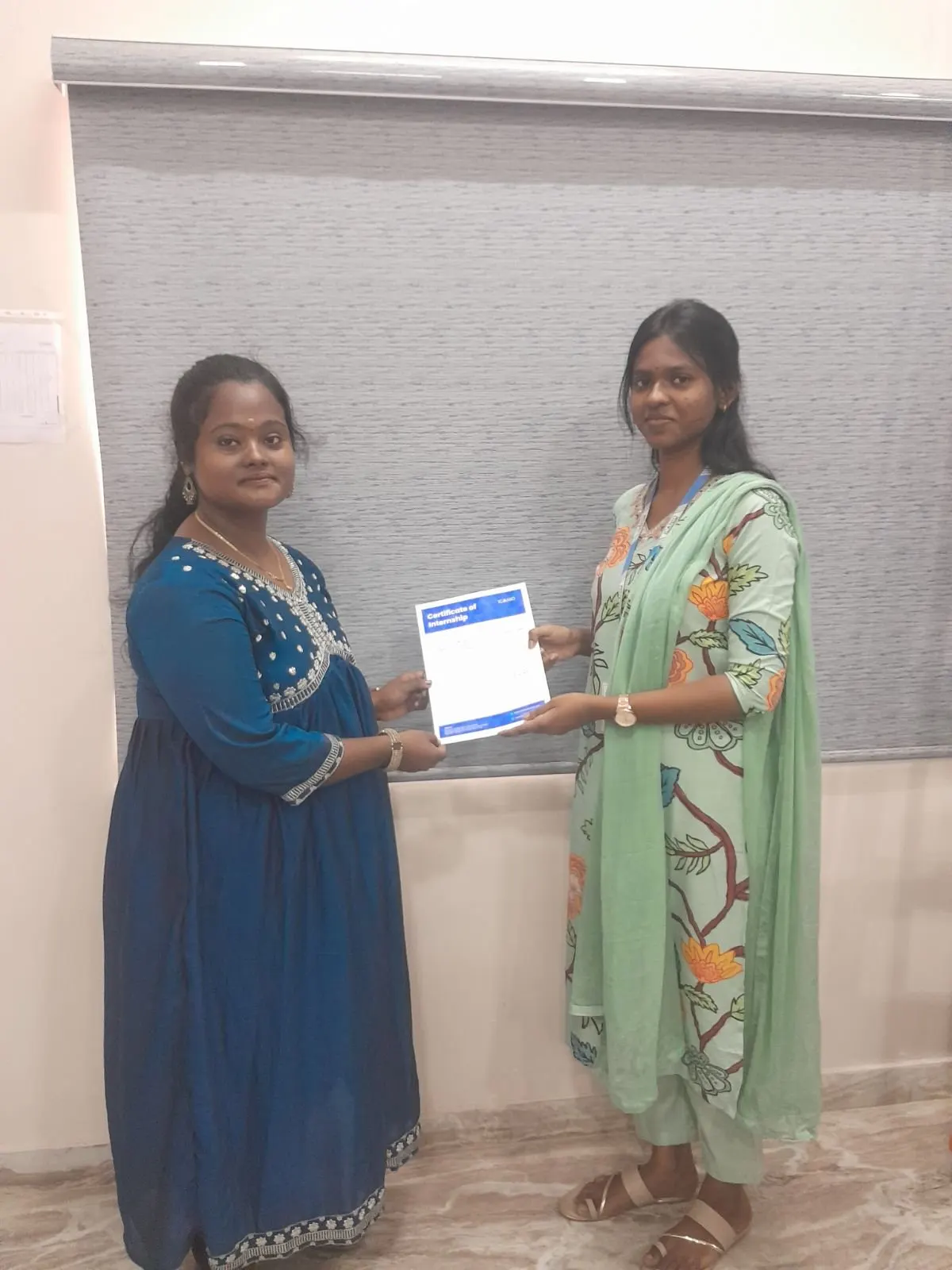
Java and Spring Boot · one-month
S Lakshmi
B.Tech IT, Dr. Sivanthi Aditanar College of Engineering, Tiruchendur
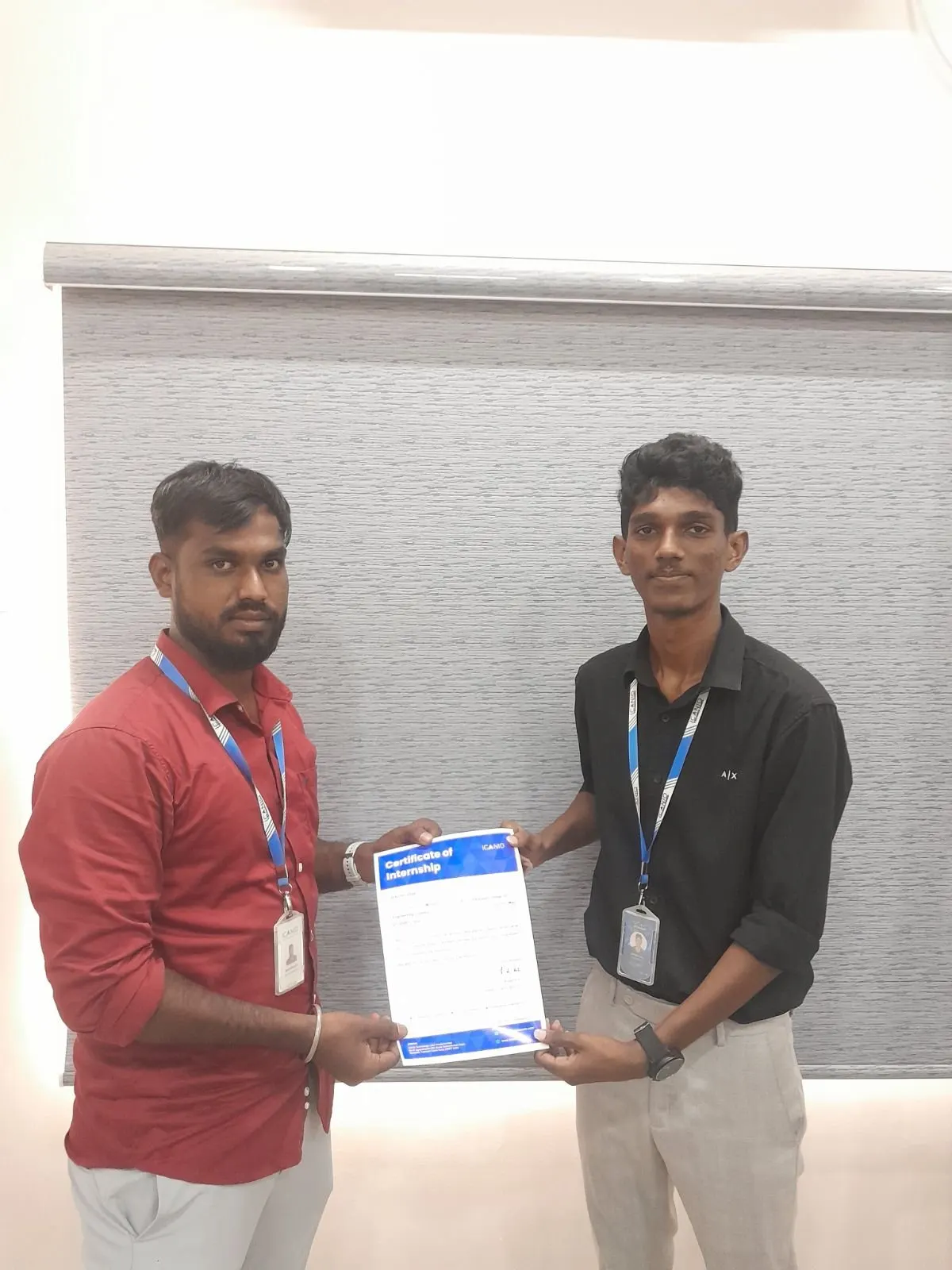
DevOps · one-and-a-half-month
Harisankar M
B.Tech IT, Karpagam College of Engineering, Coimbatore
In their words
Interns on learning the frontend developer roadmap
Hear from students who built real web projects with our mentors while working through the frontend developer roadmap.
“The training gave me the confidence and practical knowledge to begin my career in finance. I gained valuable experience through real-world tasks and hands-on learning.”
 Madhukiran BFinance Intern
“The program gave me the practical skills and confidence to build real-world web applications. I learned through hands-on projects and continuous guidance.”
 Elakkiya Vadhana RWeb Development Intern
“The training helped me strengthen my design skills and understand real-world user needs. I gained practical experience through hands-on projects and creative problem-solving.”
 Amala MaryUI/UX Intern
“The training improved my technical skills and helped me understand modern front-end development. Working on real projects gave me valuable hands-on experience and confidence.”
 Valli Myla GanesanFront End Intern
Keep exploring
Internships that match the frontend developer roadmap
Frontend development internship
Four phases, 1:1 mentorship and three live web projects.
Full stack development internship
Add backend and database skills to your frontend base.
UI/UX design internship
Learn the design side that frontend developers work with every day.
How to get an internship as a fresher
Turn your roadmap projects into interview calls.
Technical workshops
Short, hands-on sessions on web development and more.
All internships
Compare all 15 tracks side by side.
Start building
Follow the frontend developer roadmap with a mentor
Apply for the frontend internship and our team will help you pick the right duration and start date.
- 1:1 mentorship from a practising Icanio engineer
- Four learning phases and three live web projects
- Certificate on completion
Frequently Asked Questions
Is frontend development a good career for freshers?
Yes. Almost every business needs websites and web apps, so frontend skills stay useful across industries. It is also one of the easiest fields to show proof in, because a deployed project is visible to anyone with a link. That makes it a practical first track for many students.
Can I follow a frontend developer roadmap without a CS degree?
Yes. Many frontend developers come from other degrees or are self-taught. Employers mainly look at what you can build. Follow the stages in order, build a project at each stage and keep your code public on GitHub. Your portfolio will speak for your skills.
Do I need to be good at maths for frontend development?
Basic school maths is enough for most frontend work. You will use simple arithmetic for layouts and percentages and some logic for conditions and loops. Advanced maths only matters for niche areas like graphics or animation engines.
Which is better to learn first, React or Angular?
Either can get you hired, but React is a common first choice because of its large community, learning resources and flexible ecosystem. Whichever you choose, learn core JavaScript first. The concepts you learn in one framework transfer well to others.
Is TypeScript necessary for a frontend developer?
It is not required to start, but it is increasingly expected in team projects. TypeScript adds types to JavaScript and catches errors before your code runs. We recommend adding it at the React stage of your frontend developer roadmap.
How many projects do I need before applying?
Two or three deployed projects are enough for an internship application. One should be a responsive static site, one a JavaScript app using an API, and ideally one React app. Quality and clear READMEs matter more than the number of projects.
What is the difference between frontend and full stack?
A frontend developer focuses on what users see and interact with in the browser. A full stack developer also builds the server, APIs and database behind it. Many developers finish a frontend developer roadmap first and then extend into full stack.
How long is the Icanio frontend internship?
You choose a duration from 15 days up to six months. Longer durations cover all four learning phases in more depth and include a larger capstone project. You can attend offline, online, part time or in hybrid mode.
Key Takeaways
- A frontend developer roadmap runs from HTML, CSS and JavaScript to React, TypeScript, testing and deployment.
- Most students need six to nine months at 10 to 15 hours a week to become internship ready.
- Learn core JavaScript before React, and add TypeScript at the React stage.
- Build and deploy one project at each stage, so your portfolio shows steady growth.
- Accessibility, testing and performance skills set junior frontend developers apart.
Conclusion
A frontend developer roadmap only works if you build as you learn. Take one stage at a time, finish a project at each step and put everything online. In a few months, you will have both the skills and the proof employers look for.
If you want structure, reviews and a mentor who ships frontend code for clients, the Icanio Tech School frontend internship follows this same path.
Start your frontend developer roadmap today
Join the frontend internship, get a mentor and build three live web projects.
Contact our team at techschool@icanio.com or call +91 91500 09316, Monday to Saturday.